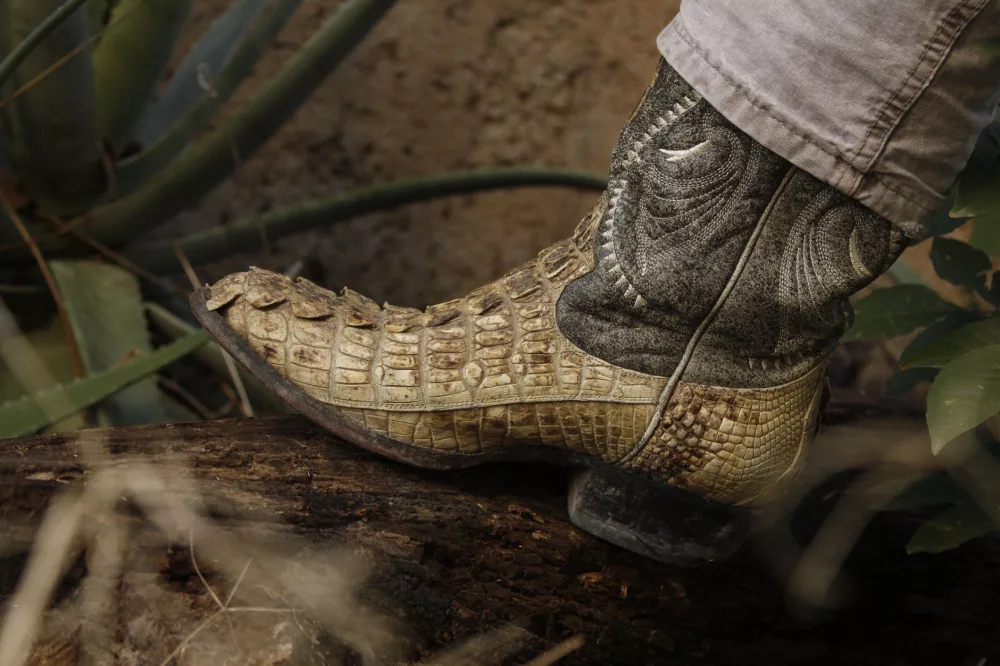
When you first hear the phrase "fish skin boots," I bet your mind immediately conjures up some pretty wild images, doesn't it? Mine certainly did! I remember thinking, wait, fish? Like, from the ocean? It sounds utterly unconventional, maybe even a little outlandish to some, but let me tell you, this isn't just a novelty. We're talking about a fascinating, incredibly durable, and surprisingly sustainable material that has a rich history and a burgeoning future in high-end fashion and practical footwear.
The Unexpected History of Aquatic Leather
You know, fish leather isn't some brand-new, quirky invention from a modern designer's studio. Not at all. It's actually got roots that stretch back centuries, potentially even millennia. Indigenous communities across the globe, particularly those living near abundant aquatic resources, have long understood the value of fish skin. I'm talking about places like Scandinavia, parts of Russia, and especially among groups like the Ainu people of northern Japan and the Nivkh of Siberia. For these folks, every part of an animal was precious, and that absolutely included the skin of fish like salmon, cod, and carp.
They weren't just making pretty things, either. They were crafting essential items. Think about it: they needed strong, pliable materials for clothing, bags, and yes, even footwear, long before the days of cattle farming and conventional leather production. These communities developed sophisticated, albeit traditional, tanning methods using natural ingredients to transform what many of us today would consider waste into something remarkably useful and resilient. It's a testament to human ingenuity, I think, and a powerful lesson in resourcefulness.
What Makes Fish Skin So Special?
So, what exactly is it about fish skin that makes it suitable for something as demanding as a boot? Well, I've learned it's largely down to its unique fiber structure. Unlike the criss-cross pattern you find in mammalian leathers, fish skin fibers run in parallel rows. This gives it exceptional tensile strength, making it surprisingly durable. Some studies even suggest it can be stronger than conventional cowhide of similar thickness.
- Strength: Its unique fiber orientation lends incredible robustness.
- Texture: Each type of fish offers a distinct scale pattern and feel, from the smooth, subtle grain of tilapia to the more pronounced, exotic texture of salmon.
- Lightweight: Generally, it's lighter than traditional leathers, which can be a real plus for comfortable boots.
- Sustainable: Often sourced as a byproduct of the fishing industry, reducing waste.
When you pick up a piece of properly tanned fish leather, you're not going to feel something slimy or brittle; quite the opposite. It's soft, supple, and has a tactile quality that's really unlike anything else. I'd describe it as having a sort of elegant ruggedness, if that makes sense.
The Craft of Tanning Fish Skin: More Than Just a Pretty Face
Getting from a raw fish skin to a high-quality piece of leather isn't a simple task; it's an art form, really. The tanning process is crucial, and it's evolved from those ancient, natural methods to more modern, eco-conscious techniques. Here's a simplified look at what goes into it:
- Preparation and Descaling: First, the skins need to be meticulously cleaned. All flesh and fat must be removed, which is often done by scraping. Then, if desired for the final aesthetic, the scales are removed, typically through a gentle mechanical process.
- Fleshing and Degreasing: This step ensures any remaining organic matter is gone, and the skin is thoroughly degreased. Fish skin can be quite oily, so this is particularly important for longevity and to prevent rancidity.
- Pickling: The skins are then immersed in an acidic solution, often containing salt, which helps to preserve them and prepare them for the actual tanning agents. This opens up the fibers and makes them more receptive to the tanning chemicals.
- Tanning: This is the transformative stage. Traditional methods might have used bark tannins, vegetable matter, or even brain matter (believe it or not!). Today, you'll find both vegetable tanning, using plant-based tannins, and chrome tanning, which uses chromium salts. Many producers focusing on sustainability opt for vegetable tanning or other bio-friendly alternatives. The tanning agents stabilize the collagen fibers, preventing putrefaction and making the leather durable and flexible.
- Neutralization and Retanning: After the main tanning, the skins are neutralized to achieve the desired pH. They might then undergo retanning with different agents to enhance properties like softness, strength, or water resistance.
- Fatliquoring: This is a critical step where oils and lubricants are introduced into the leather. This makes the material pliable, soft, and prevents it from becoming stiff or cracking.
- Drying and Finishing: Finally, the leather is carefully dried, often stretched or staked to achieve uniformity. Then comes the finishing, which can include dyeing, embossing, buffing, or applying protective coatings to achieve the desired color, texture, and sheen.
It's a labor-intensive process, that's for sure. But the result is a truly remarkable material.
Why Choose Fish Skin Boots? Practicality Meets Style
Honestly, the reasons are compelling once you get past the initial surprise. For starters, we're talking about durability. As I mentioned, that unique fiber structure makes these boots surprisingly tough. I've heard stories of them holding up incredibly well to wear and tear. Then there's the aesthetics. Each type of fish offers a distinct pattern – salmon has a subtle, almost woven texture; tilapia can be smoother; perch might offer a bolder, more reptilian look. This means your boots aren't just footwear; they're a statement piece, a conversation starter. You really can't mistake it for anything else, and I find that pretty cool.
Another huge factor for me is the sustainability aspect. In a world increasingly concerned with environmental impact, fish leather offers a compelling alternative to traditional leathers. It predominantly uses skins that would otherwise be discarded as waste from the food industry. We're talking about taking something destined for the landfill and turning it into a valuable, beautiful product. That's a circular economy win right there, and it just feels right, doesn't it?
The Challenges and Considerations
Of course, it's not all smooth sailing. There are a few hurdles. One is cost. Because it's a specialized product, often processed by smaller tanneries with intricate methods, fish leather can be more expensive than conventional options. Also, availability isn't as widespread, so finding specific types or colors might require a bit more searching. And then there's the perception: some people just can't get over the idea of wearing fish. But I think with more education and exposure, that's changing.
My Thoughts on Its Place in Modern Footwear
I genuinely believe fish skin boots represent an exciting direction for footwear and fashion. They offer a blend of historical craftsmanship, innovative sustainability, and truly distinctive style. Imagine a pair of sleek, urban ankle boots made from iridescent salmon leather, or rugged, adventurer-style boots crafted from robust cod skin. The possibilities for designers are enormous, allowing for creations that are both practical and incredibly unique.
Ultimately, opting for fish skin boots is more than just a style choice; it's a nod to tradition, a vote for sustainability, and an embrace of the extraordinary. It shows a willingness to step outside the conventional and appreciate the incredible resources our world offers, even in the most unexpected forms. And honestly, isn't that what fashion should be about sometimes? Pushing boundaries and telling a story?