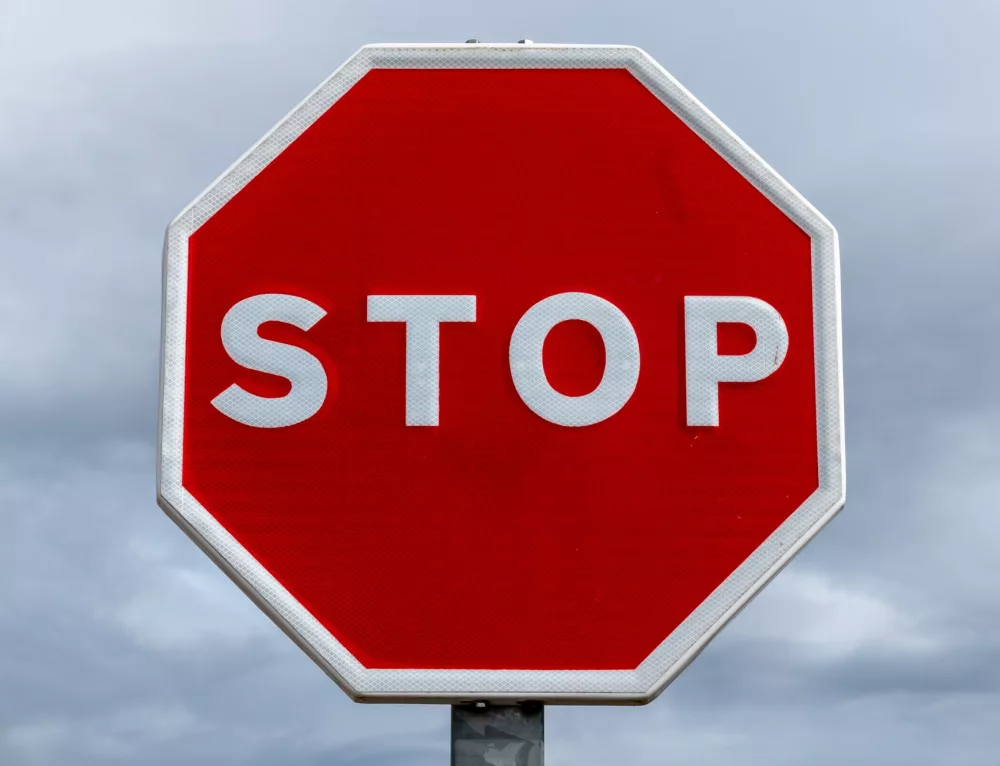
When we're out on the road, navigating bustling city streets or quiet suburban lanes, there's one traffic control device that stands out with its unmistakable shape and color: the stop sign. It's a simple, yet incredibly powerful command, recognized almost universally, telling us precisely what to do. For many of us, it's just another part of the driving landscape, something we obey almost instinctively. But have you ever really considered its journey, its design, or the profound impact it has on our daily safety? I often find myself pondering these things as I come to a complete stop, waiting for my turn.
A Look Back: The Fascinating History of the Stop Sign
You know, it wasn't always this clear-cut. In the early days of motoring, especially in the 1900s, intersections were pretty chaotic. There weren't many standardized rules, and drivers just kind of figured it out on their own. It sounds a bit wild, doesn't it? As more cars hit the road, the need for order became screamingly apparent.
The first stop sign as we know it actually emerged in Michigan back in 1915. Interestingly, it wasn't red or octagonal then; it was a small, square sign with black letters on a white background. Fast forward a few years to 1922, and the Mississippi Valley Association of State Highway Departments (MVASHD) decided it was time for some standardization. This group really changed the game. They proposed different shapes for signs to indicate varying levels of hazard. And guess what? The octagon was chosen for the stop sign. Why an octagon, you might ask? Well, it's a pretty smart choice. It's unique; drivers can recognize it even if they only see its back or silhouette, making it distinct from any other sign on the road.
The next big change came in 1954 when the Federal Highway Administration (FHWA) made the red color mandatory. This was a crucial decision. Red is universally associated with danger and stopping, making the sign even more impactful and immediately understandable, even before you can read the word "STOP." This evolution brought us closer to the reflective, bold sign we see today, a sign designed for maximum visibility day or night.
Understanding the Design: Every Element Has a Purpose
There's a lot of thought that goes into the design of something as seemingly straightforward as a stop sign. Every single feature is there for a reason, all working together to convey its urgent message.
- The Octagonal Shape: As I mentioned, this shape is one-of-a-kind on our roads. This means that even if the sign is covered in snow or mud, or if you're approaching it from an angle where you can only see its outline, you still know exactly what it is. This uniqueness is a huge safety advantage.
- The Striking Red Background: This isn't just a pretty color. Red is the international symbol for stop, danger, and warning. Our brains are hardwired to react to red with caution. It grabs our attention immediately, doesn't it?
- The Bold White Border and Text: The white border provides a strong contrast against the red, making the sign stand out even more. The word "STOP" itself is always in uppercase, crisp white letters. This combination ensures maximum readability from a distance and in various lighting conditions. There's no ambiguity here.
- Strategic Placement: You'll notice stop signs are always placed in specific locations, usually at intersections, before crosswalks, or at railway crossings. They're positioned for optimal visibility, giving drivers ample time to react safely.
Our Role: Legal Responsibilities and Safety
I think it's fair to say that understanding the stop sign isn't just about recognizing its shape; it's about respecting its command. It's a legal mandate, not just a suggestion. When we see that red octagon, we're required to bring our vehicle to a full and complete stop. This means your wheels must cease all rotation – no rolling through, even slowly. I've certainly had moments where I almost made that mistake, and it's a stark reminder of how important it is to be fully present while driving.
Ignoring a stop sign carries significant consequences, beyond the obvious risk of a collision. We're talking about fines, points on your driving record, and increased insurance premiums. More importantly, running a stop sign can lead to severe accidents, endangering not only ourselves but also passengers, pedestrians, and other drivers. It's a moment to pause, look both ways, and yield the right-of-way when necessary, ensuring the intersection is clear before proceeding.
Navigating Different Stop Scenarios
Stop signs aren't just one-size-fits-all in their application. We encounter them in various scenarios, each with slightly different rules to remember:
- Two-Way Stops: These are probably the most common. Only traffic on your approach stops, while cross traffic generally doesn't. This requires extreme caution and a careful assessment of oncoming vehicles.
- All-Way Stops (or Four-Way Stops): Here, everyone arriving at the intersection must stop. The general rule is "first to stop, first to go." If two vehicles arrive simultaneously, the one on the right typically has the right-of-way. These can sometimes feel a bit like a polite dance between drivers, can't they?
- Stop Lines and Crosswalks: When there's a white stop line painted on the pavement, you must stop before it. If there's no line but there is a crosswalk, you stop before the crosswalk. This is super important for pedestrian safety; we need to make sure we're not blocking their path or impeding their visibility.
Beyond Our Borders: A Universal Language of Safety
It's fascinating to consider that the red octagonal stop sign isn't just a North American phenomenon. It's a truly global symbol. While there might be minor variations in font or local language text (like "ALTO" in Spanish-speaking countries), the core design, the red octagon, is recognized and obeyed almost everywhere. This global standardization is a powerful thing; it means drivers traveling internationally can quickly understand a critical safety command, no matter where they are. It really underscores how much we rely on these visual cues for our shared safety.
The Unseen Impact: Balancing Safety and Efficiency
The stop sign plays an enormous role in managing traffic flow and significantly reducing accidents at intersections. By forcing drivers to pause and evaluate their surroundings, it helps prevent collisions that would otherwise occur due to blind spots or differing speeds. It effectively creates moments of intentional assessment, which is incredibly valuable.
Of course, stop signs can also contribute to traffic delays, especially in areas with high traffic volume. Urban planners and traffic engineers constantly weigh the safety benefits against potential congestion when deciding whether to install a stop sign, a traffic light, or even a roundabout. It's a complex decision, but safety is almost always the overriding factor. I think we'd all agree that a short delay is a small price to pay for preventing a serious accident.
For me, the stop sign is more than just a regulatory device. It's a constant reminder of our shared responsibility on the road. Every time I come to a complete halt, I take a quick moment to check my mirrors, glance at my surroundings, and ensure everything is clear before I proceed. It's a brief, enforced moment of mindfulness that contributes to the safety of everyone. It's a silent guardian, a simple, red, eight-sided command that keeps our intricate network of roads flowing as safely as possible, day in and day out. We often take it for granted, but I believe its importance simply can't be overstated.