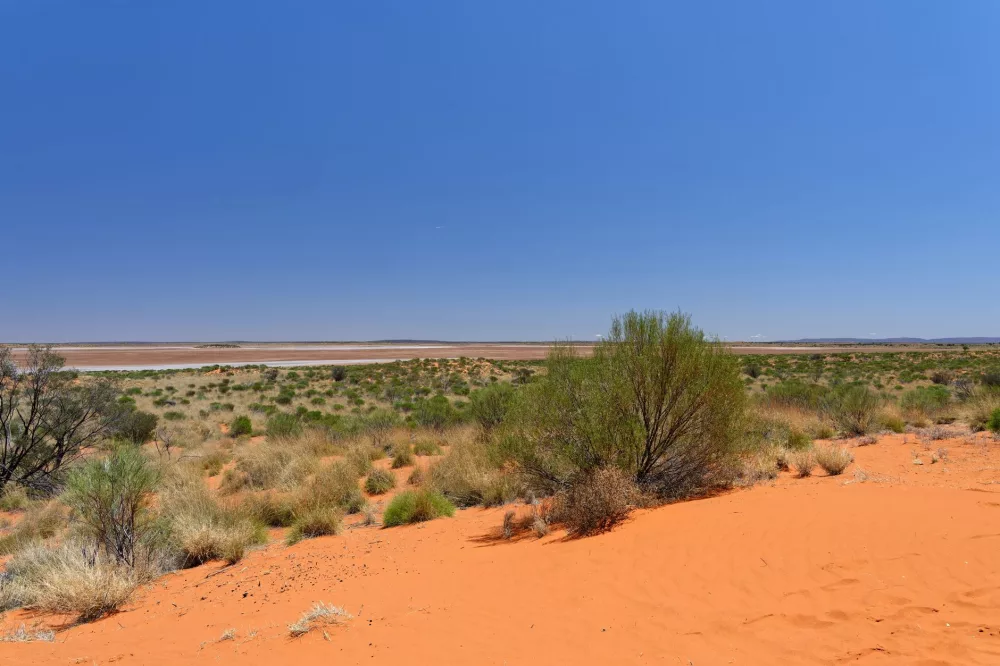
When I think about the Australian Outback, my mind immediately conjures images of vast, untouched landscapes stretching endlessly under an immense sky. It’s truly immense, isn’t it? This isn’t just a dusty patch of land; it’s an iconic region that covers the majority of Australia’s landmass, embodying a spirit of rugged beauty, isolation, and profound cultural significance. I’ve always found it utterly captivating, a place that seems to defy easy definition.
Understanding the Outback's Expansive Geography
The term 'Outback' itself, I believe, speaks to a certain mystique, referring generally to Australia's remote, arid, and semi-arid interior. It's often contrasted with the more densely populated coastal areas. Its sheer scale is difficult to grasp unless you've seen it firsthand. We're talking about millions of square kilometers, a territory larger than many European countries combined. What I find most fascinating is that it isn't a homogenous landscape.
Instead, the Outback boasts an incredible diversity of environments. You'll encounter:
- Red Deserts: Iconic areas like the Simpson Desert, characterized by towering red sand dunes and incredible solitude.
- Ancient Mountain Ranges: Places like the MacDonnell Ranges in the Northern Territory, with their dramatic gorges and waterholes.
- Spinifex Grasslands: Vast plains covered in tough, spiky grasses, perfectly adapted to the harsh conditions.
- Seasonal Rivers and Billabongs: Waterways that might be dry for years but burst into life after rare rainfall, transforming the landscape almost overnight.
The climate, as you might expect, is dominated by extremes. Daytime temperatures can soar well above 40 degrees Celsius (104 Fahrenheit) in summer, while winter nights can bring surprisingly cold temperatures, sometimes dipping below freezing. Rainfall is sparse and unpredictable, shaping everything from the vegetation to the daily lives of those who call this land home. It's a tough environment, no doubt about it, and I think that's part of its enduring appeal.
Life Thrives: The Outback's Unique Flora and Fauna
Despite its arid reputation, the Outback supports an astonishing array of life, all of it marvelously adapted to survive the harsh conditions. I'm always amazed by the resilience of nature here.
The Animal Kingdom
Many of Australia's most iconic animals, I'd say, are synonymous with the Outback. We're talking about:
- Kangaroos and Wallabies: These marsupials hop across the plains with incredible speed, finding sustenance in sparse vegetation.
- Emus: Australia's largest bird, often seen in small groups, foraging for seeds and fruits.
- Dingoes: The wild dogs of Australia, a top predator, have learned to thrive in this challenging environment.
- Reptiles: A diverse population of snakes, lizards, and goannas, many of which are nocturnal to escape the daytime heat.
Birdlife is also surprisingly abundant, especially around water sources. It's not uncommon to spot wedge-tailed eagles soaring high above or flocks of galahs and cockatoos adding splashes of color and sound to the otherwise quiet landscape. I find their adaptations, like digging for water or having specialized diets, absolutely fascinating.
Resilient Plant Life
The flora of the Outback might not be as immediately obvious as the fauna, but it's equally remarkable. Many plants have evolved incredible strategies for survival, such as deep root systems to tap into underground water, succulent leaves to store moisture, or seeds that can lie dormant for decades, only to germinate after a significant rain event. Ghost gums, acacias (wattles), and various native grasses are classic examples, providing essential food and shelter for wildlife. It just goes to show you, life finds a way, even in the toughest spots.
A Deep History: Indigenous Heritage of the Outback
Long before European explorers ventured into the interior, Aboriginal and Torres Strait Islander peoples had inhabited the Outback for tens of thousands of years. Their connection to this land is incredibly deep and complex, I feel. They developed intricate knowledge of its resources, its cycles, and its spiritual significance. We can still see evidence of their rich culture in:
- Ancient Rock Art: Stories, warnings, and spiritual beliefs etched into rock faces across the continent.
- Dreaming Tracks: Pathways and narratives that crisscross the land, connecting sacred sites and explaining creation.
- Sustainable Land Management: Traditional practices, including fire stick farming, which shaped the landscape for millennia.
Their understanding of the Outback's delicate ecosystems is something I think we can all learn from. It's a heritage that’s still very much alive and integral to the identity of many communities today.
European Settlement and Industry: A History of Challenge and Innovation
European exploration of the Outback began in earnest in the 19th century, often driven by a quest for fertile land or mineral wealth. These early expeditions were incredibly arduous, pushing the limits of human endurance. I can't imagine what it must've been like.
Pastoralism and Mining
Settlement was initially sparse, focusing on vast pastoral leases where sheep and cattle could be grazed. These 'stations' are often enormous, some larger than small countries, managed by families or companies who've embraced a truly unique way of life. It’s hard work, no question.
Mining has also played a crucial role. The Outback is rich in minerals, from gold and opals to iron ore and uranium. Mining towns, often remote and self-sufficient, have sprung up, creating pockets of industry and community amidst the vast emptiness. These industries continue to be vital to Australia’s economy.
Modern Life in the Remote Interior
Life in the Outback today is a blend of tradition, innovation, and unwavering resilience. It isn't easy, but the communities out there have certainly figured out how to make it work, often in truly ingenious ways.
- Remote Communities: Towns like Alice Springs serve as major hubs, but countless smaller settlements and stations are scattered across the interior.
- Royal Flying Doctor Service (RFDS): An iconic Australian institution, the RFDS provides emergency medical and primary healthcare services to those living in remote areas, often flying thousands of kilometers. I think it’s one of the best examples of Australian ingenuity and care.
- School of the Air: This innovative educational program delivers schooling to isolated children via two-way radio and now internet, ensuring that distance doesn't mean a lack of opportunity.
- Tourism: The Outback draws visitors from all over the world, eager to experience its unique landscapes, wildlife, and indigenous culture. Sites like Uluru and Kata Tjuta are powerful drawcards, and I can certainly see why.
Challenges and the Path Forward
Despite its enduring appeal, the Outback faces significant challenges. Water scarcity is a constant concern, exacerbated by climate change, which is leading to more frequent and intense heatwaves and droughts. Land management is complex, balancing the needs of agriculture, mining, conservation, and indigenous land rights. I believe finding sustainable solutions will be absolutely critical for its future.
Conservation efforts are ongoing, focusing on protecting vulnerable species, managing invasive pests, and preserving pristine wilderness areas. It's a delicate balance, trying to ensure economic viability for those who live and work there while safeguarding its irreplaceable natural and cultural heritage.
The Enduring Allure of the Outback
Ultimately, what is it about the Outback that so captures the imagination? For me, it’s its profound sense of scale, its raw, untamed beauty, and the feeling of stepping back in time. It's a place where the stars shine brighter than anywhere else, where the silence is sometimes deafening, and where every creature and plant tells a story of survival. It reminds us of the power of nature and the resilience of both human and animal life. I think it truly is the heart of Australia, rugged, beautiful, and utterly unforgettable.