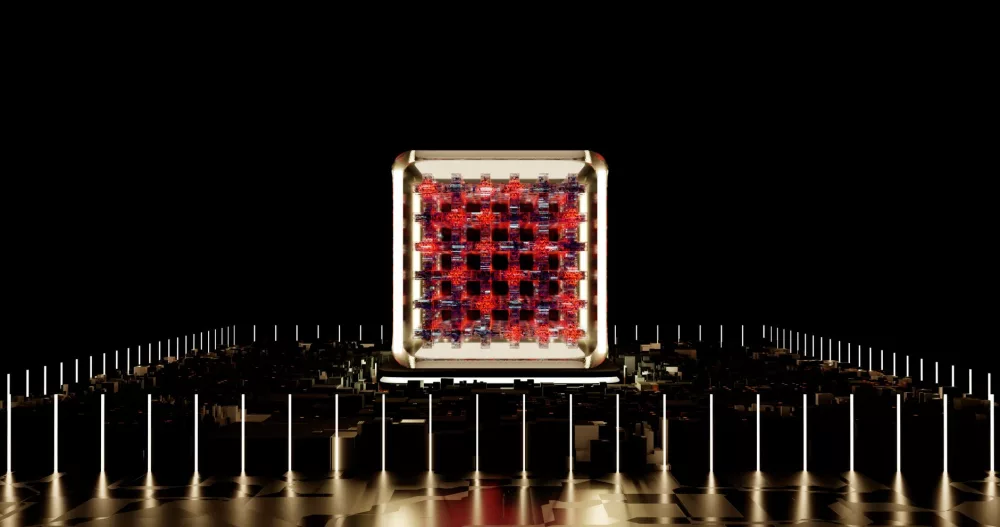
When I think about the future of computing, particularly how we handle increasingly vast datasets and complex artificial intelligence models, I often feel we're reaching the limits of conventional approaches. It's like trying to fit an ocean into a teacup, isn't it? This is precisely why I believe the emergence of concepts like ZR1X represents such a significant leap. ZR1X isn't just another incremental upgrade; it’s a foundational rethinking, a brand-new computational architecture designed from the ground up to conquer the most daunting challenges in data processing and AI. I'm talking about a system that promises unprecedented speed, scalability, and efficiency, truly pushing the boundaries of what we thought was possible.
The Genesis of ZR1X: Addressing Today's Bottlenecks
For years, we've relied on advancements in chip manufacturing and incremental software optimizations to keep pace with our growing computational needs. But as the sheer volume of data explodes and AI models become exponentially larger, we're hitting some serious walls. Think about it: traditional CPU-centric architectures, even with GPU acceleration, often struggle with bottlenecks in memory access, inter-node communication, and power consumption. Training a cutting-edge large language model can cost millions and take weeks, sometimes months, consuming vast amounts of energy. From my perspective, this isn't sustainable, and it's certainly not optimal if we want to unlock the next generation of AI capabilities.
The creators of ZR1X, as I understand their vision, looked at these limitations and decided a radical departure was necessary. Their goal was to design a system that isn't just faster, but fundamentally smarter about how it processes information, making every single computational cycle count. They envisioned an architecture that could dynamically adapt, learn from its own operations, and reconfigure itself to achieve optimal performance for diverse workloads. That's a pretty ambitious undertaking, wouldn't you say?
Dissecting the Core Principles of ZR1X
So, what exactly makes ZR1X tick? From what I've gathered, it hinges on a few ingenious principles that collectively redefine computational efficiency. It's not about brute-forcing problems with more transistors; it's about intelligent resource utilization and novel processing methodologies.
Hyper-Distributed Processing with Quantum-Inspired Elements
One of the cornerstone ideas behind ZR1X is its hyper-distributed processing model. Unlike traditional clusters where data is often centralized or redundantly distributed, ZR1X employs what I'd describe as a 'lattice-based' data fabric. Each processing unit, or 'nodelet,' in the ZR1X system operates with a high degree of autonomy but is deeply interconnected with its neighbors through ultra-low-latency pathways. I've heard some talk about how its design incorporates certain quantum-inspired entanglement concepts, not in the sense of actual quantum mechanics, but in how information states can be correlated and processed simultaneously across physically separate units without explicit, high-overhead communication protocols. This allows for truly massive parallelism without the typical communication overheads that plague distributed systems.
Adaptive Resource Allocation and Self-Optimization
Another compelling aspect is ZR1X's inherent ability to adapt and self-optimize. Imagine a system that doesn't just run your code but actually understands the computational graph and dynamically reallocates resources on the fly to maximize throughput and minimize latency. ZR1X achieves this through an advanced, AI-driven meta-scheduler. I've been told it constantly monitors system load, data flow patterns, and even the thermal characteristics of individual nodelets to predict bottlenecks before they even occur. It then re-routes computational tasks and data streams to ensure continuous, uninterrupted optimal performance. This is a far cry from static resource provisioning we typically deal with, and it's incredibly exciting to think about the efficiency gains here.
In-Memory Compute and Near-Data Processing
A significant performance killer in conventional architectures is the constant shuttling of data between processing units and memory. ZR1X largely sidesteps this issue through a pervasive in-memory compute paradigm combined with near-data processing. This means that instead of bringing data to the CPU, computation often happens where the data resides, significantly reducing latency and energy consumption. It's like bringing the workshop to the materials, rather than hauling all the materials to a central workshop. This approach, I believe, will be absolutely critical for handling the gargantuan datasets we anticipate in the coming decades.
The Transformative Potential of ZR1X
The implications of a system built on ZR1X principles are truly vast. I foresee it revolutionizing several key areas:
- Accelerated AI Training and Inference: Imagine training multi-trillion-parameter models in hours instead of months, or running complex AI inference at edge devices with incredible speed and energy efficiency.
- Scientific Discovery: From drug discovery simulations to complex climate modeling, ZR1X could provide the raw computational muscle needed to break new ground in research.
- Real-time Data Analytics: Businesses could process and analyze streaming data in real-time at scales previously unimaginable, leading to quicker insights and more agile decision-making.
- Blockchain and Decentralized Systems: With its distributed nature and focus on efficiency, ZR1X could offer a robust foundation for next-generation decentralized applications and cryptographic computations.
Challenges on the Horizon
Of course, no groundbreaking technology comes without its hurdles. Integrating ZR1X into existing infrastructure presents a significant challenge, requiring new software ecosystems, programming paradigms, and potentially specialized hardware interfaces. We're also talking about a complex system, and ensuring its security, reliability, and ease of management will be paramount. I'm keen to see how the community rallies to build the necessary tools and best practices around this architecture.
Looking ahead, I feel confident that ZR1X, or similar architectural philosophies it champions, represents a crucial step toward unlocking the next era of computational power. It’s not just about doing things faster; it’s about doing them fundamentally better, more efficiently, and with a greater capacity to solve the truly grand challenges facing humanity. We're on the cusp of something extraordinary, and ZR1X feels very much like a key part of that story. I can't wait to see how it shapes our technological landscape.